
More frequent icebergs could trash Antarctic sea floor

authordefault
on

While not much life exists on the icy surface of the Antarctic, life is teaming undersea and scientists are now worried that more frequent icebergs could pose a real threat to these underwaterย inhabitants.

Antarctic sea spider

In an article, Ice scour disturbance in Antarctic waters, published in the prestigious journal Science, members of the British Antarctic Survey have concluded that as temperatures continue to rise due to global warming, an increasing number of bottom-scouring icebergs could literally scrape away many of the species that live in Antarctica’s shallowย waters.

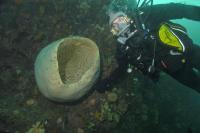
Cushion stars in the shallow Antarctic waters

The rate of iceberg scouring on the West Antarctic Peninsula seabed is affected by the duration of winter sea ice, which has dramatically declined (in space and time) in the region over the last few decades due to climate warming. This increase in iceberg disturbance on the seabed, where the majority of all Antarctic life occurs (80%), could have severe effects on the marine creatures living as deep as 500mย underwater.


On November 8, 2008 Todd will attempt to become the first American in history to reach the South Pole, solo and unaided.

Sign up for Todd’s Expedition E-lerts and keep track of Todd’s Expedition with live updates throughout theย journey.

Related Posts

on

The key facts about one of Nigel Farageโ€™s closest allies.

The key facts about one of Nigel Farageโ€™s closest allies.
Analysis
on

Itโ€™s a massive subsidy to Equinor, the Norwegian oil company behind the Bay du Nord offshore oil project.

Itโ€™s a massive subsidy to Equinor, the Norwegian oil company behind the Bay du Nord offshore oil project.
on

A new childrenโ€™s book by a Chevron-backed clean energy venture paints a sympathetic portrait of coal, oil, and gas.

A new childrenโ€™s book by a Chevron-backed clean energy venture paints a sympathetic portrait of coal, oil, and gas.
Analysis
on

Fossil fuel interests and climate science deniers have been leading the charge for more drilling.

Fossil fuel interests and climate science deniers have been leading the charge for more drilling.