
What did you learn from the recent oil spill off the coast of Louisiana?
“I think it’s always been clear that the oil sands provide a safe, stable, secure supply of energy and they need to be developed in an environmentally responsible way. The risks associated with the oil sands, the environmental risks, are significantly different than, and probably less than the kind of risks associated with offshore drilling,” he said.”
Of course, he remains vigilant to the mandate of his office as, you know, the Environment Minister:
“But we still have to be on our game in terms of the environmental regulations for the oil sands as well.”
Sure, the risks of offshore drilling are significant, and they are different from those tied to tar sands extraction. Prentice, though, is either oblivious or negligent in his failure to mention the risks associated with the growth in atmospheric co2 concentrations that will accompany increased output from the Alberta tar sands. Indeed, if we chose to engage Prentice’s clumsy comparison, we could say that those risks are likely far worse than the ones associated with offshore drilling accidents.
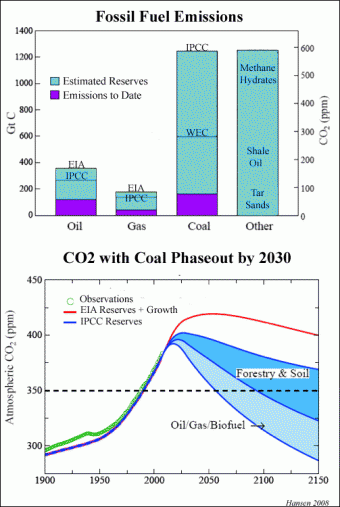
The problem here is that full exploitation of currently available reserves of oil, coal, and natural gas will already take us well over the 450ppm threshold that most experts agree gives the best chance of avoiding catastrophic global warming of more than 2 degrees. Some stuff needs to stay in the ground, including a chunk of coal and offshore oil reserves. So too will most non-traditional fossil fuel sources like the tar sands, which are expensive and also require large energy inputs to extract.
James Hansen has a visualization of that challenge from a 2008 paper (this version actually from his more recent presentations):
Adding further to the intellectual depth of this conversation, Prentice hopes Canadians will become tar sands evangelists:
“It’s important that we as Albertans continue to go to Washington, that we as Canadians explain in the United States and elsewhere … that we are developing the oil sands up to the highest possible environmental standards. We need to communicate that fact.”
Prentice and the Conservative Party have apparently transformed major Canadian political offices into K-Street style firms that do PR work on behalf of the tar sands industry. Reporter Bill Graveland, who wrote the article without mentioning climate change once, and who closes the article with an “it couldn’t happen here” reference to the Canadian offshore drilling moratorium, observes this PR offensive, but awkwardly enlists himself anyways, writing this clunker of a graf:
Alberta Premier Ed Stelmach and Environment Minister Rob Renner have been fighting an international public relations war against heavyweight enviro-critics and celebrities, including National Geographic, the Audubon Society and Hollywood kingpin director James Cameron.
Those Hollywood evil-doers, out to get the tar sands again.