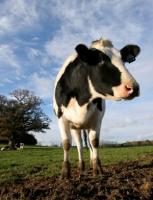
The article in the Vancouver Province, written by Jay Ambrose of Scripps Howard News Service, refers to a 400-page United Nations report saying the world’s 1.5 billion cattle and other livestock account for 18 per cent of greenhouse-gas emissions.
Ambrose then goes on to berate former Vice-President Al Gore for his “meat-aided chubbiness,” and assert that reducing livestock emissions could ruin farmers and cause food shortages. “And the consequent cutback in greenhouse gases would still fall far short of what Gore-ilk worriers say is required to save the Earth from eventual devastation.”
The day before Ambrose’s missive appeared, an article in The Lancet medical journal said reducing global red-meat consumption by only 10 per cent would reduce animal gases that contribute to global warming. With world demand increasing, however, experts fear more methane and nitrous oxide heating up the planet.
Two months earlier, a Japanese study found producing 2.2 pounds of beef generates more carbon dioxide than an average car does every 160 miles. And producing those 2.2 pounds consumed nearly 170 megajoules of energy, mostly for raising and transporting feed – the same energy a 100-watt light bulb would consume if left on for 20 days.
Ambrose made no mention of either study, nor did he give details of the UN report. So either he’s not doing sufficient research or he’s ignoring his findings. Maybe both.