

UPDATE: Environmentalists reject APEC climate agreement.
There was never any reason to hope that the conference of Asia Pacific Economic Cooperation countries was going to come to anything useful. The goal, as Australian Prime Minister John Howard stated from the outset, was to prevent the implementation of binding emission reduction targets.
Now we come away with vague climate intensity targets – little more more than business as usual – and a round of self-congratulatory rhetoric.
It’s not just that this “agreement” is toothless. It’s not just that Howard and U.S. President George Bush will try to use it to try to argue that the useful starter targets in the Kyoto accord can be replaced with something unenforceable.
It is, rather, depressing proof that these “world leaders” just don’t get it.
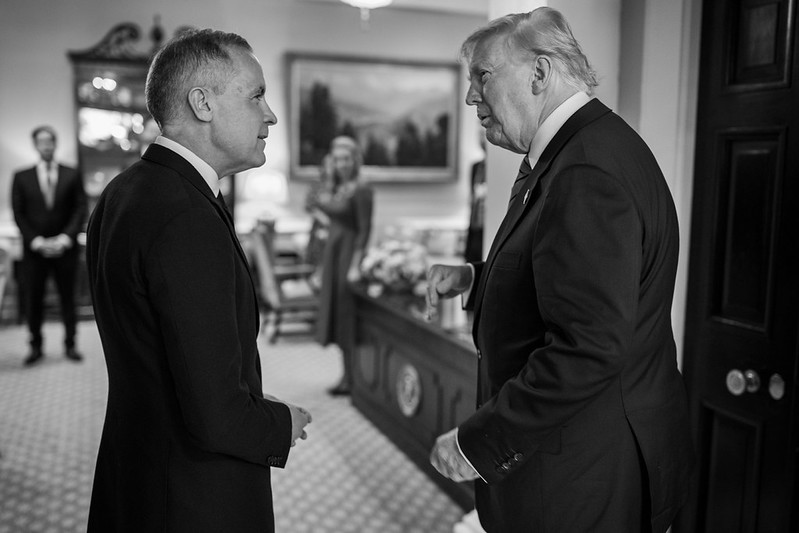
Of course, we’ve had hints. Bush, for example, showed up in Australia with an entourage of 700 and a small fleet of vehicles on three 747s. The Sydney Morning Herald estimated that the airborne cavalcade emitted 57,885 tonnes of carbon dioxide, the amount produced by 2,000 average Australians in a year. (And Australians’ per capita CO2 production is among the highest in the world.)
This can be dismissed as cheap-shot journalism. You can’t expect the leader of the richest country and the most bellicose administration in the world to climb on board a Qantas flight with a secretary and no security. But you’d think that someone in that embattled administration would have anticipated this kind of criticism. You’d think, in the internet age, that 350 of those officials could have waited at the other end of the phone for their opportunity to give APEC input. You’d think that Bush, et al, would muster a little more energy in the pretense that they care about the climate.
Alas, you’d be wrong.