
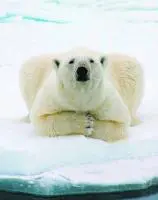
The Sunday Times article, based on the study cited by Gore, said last summer the ice cap receded about 200 miles further north than the average of two decades ago, forcing bears to make longer voyages between floes.
“We know short swims up to 15 miles are no problem, and we know that one or two may have swum up to 100 miles. But that is the extent of their ability, and if they are trying to make such a long swim and they encounter rough seas they could get into trouble,” said Steven Amstrup, a research wildlife biologist with the USGS.
The study, carried out in the Beaufort Sea, shows that between 1986 and 2005 just 4% of the bears spotted were swimming in open waters. Not a single drowning had been documented in the area. Last September, when the ice cap had retreated a record 160 miles north of Alaska, 51 bears were spotted and 20% were seen in the open sea, swimming as far as 60 miles off shore.
A few days later, after a fierce storm, researchers found four dead bears floating in the water. “We estimate that of the order of 40 bears may have been swimming and that many of those probably drowned as a result of rough seas caused by high winds,” said the report.
There were storms before 2006, the study said, but they didn’t drown bears. The bears drowned in the 2006 storm because they had to swim further because of global warming.